 European Economic Area
 Bulgaria
A Bulgarian government bill would update hazardous-mixture notifications, safety data sheets and mercury reporting.

2 min readAI-drafted, expert reviewed
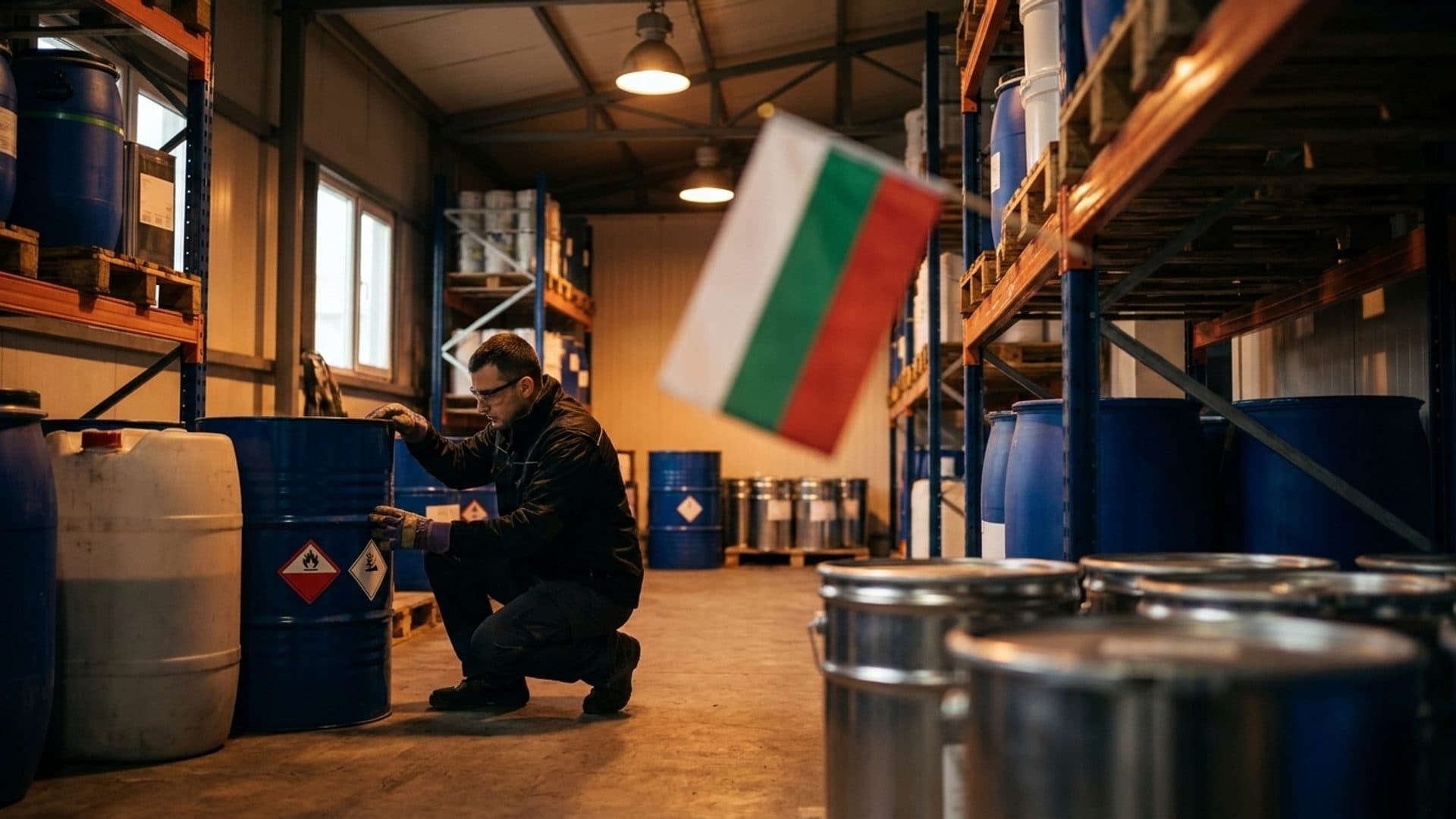
A Bulgaria CLP bill submitted by the Council of Ministers on 24 July 2026 would update national arrangements for hazardous-mixture notifications, safety data sheets and mercury controls. Parliament assigned the proposal to four committees on 27 July, giving chemical manufacturers, importers, downstream users, distributors, biocides suppliers and dental-material businesses an early view of likely process changes.
For mixtures classified for health or physical hazards, the Bulgaria CLP bill would require the relevant importers, downstream users and distributors to provide composition information before first placing the product on the market. Submissions would pass through the European Chemicals Agency's electronic platform, with Bulgaria's National Centre of Public Health and Analyses becoming the appointed body for emergency-health information.
The draft explicitly includes biocides and covers chemical identities protected by an alternative name under CLP. Suppliers handling relabelled products or cross-border distribution should therefore confirm which legal entity owns the notification and whether Bulgarian market information is complete.
The proposal would require the European emergency number 112 in section 1.4 of safety data sheets supplied under REACH. This is a small field with a large document footprint: one master template may feed product variants, customer portals, distributor systems and translated files.
Dental-amalgam manufacturers and importers would also report, by 31 May each year, quantities made or imported during the previous calendar year to the Bulgarian Medicines Agency. The provisions support updated EU mercury controls and reporting under Regulation (EU) 2017/852.
Under the Bulgaria CLP bill, companies should inventory hazardous mixtures sold in Bulgaria, reconcile ECHA submissions with local product lists, identify affected safety data sheets and preserve dental-amalgam volume records. Because parliamentary scrutiny may alter wording or commencement, system changes should remain configurable until the final text is promulgated.
Official source
National Assembly of the Republic of Bulgaria, chemicals and mercury amendment bill submitted 24 July 2026parliament.bg
The Bulgaria CLP bill identifies importers, downstream users and distributors covered by CLP Article 45 provisions when they place health-hazardous or hazardous mixtures on the Bulgarian market. Submissions would be made before first placement through ECHA's electronic platform. Businesses should map the entity for each imported, relabelled or redistributed mixture.
Most Bulgaria CLP bill provisions would apply from publication in Bulgaria's State Gazette if Parliament adopts the bill, while CLP references follow phased dates extending into 2027 and 2028. The text remains a bill, so companies should monitor amendments, final passage and promulgation before locking dates into systems or contracts.

Dr Steven Brennan
CEO and co-founder of Foresight, and a co-opted member of ECHA's Committee for Socio-economic Analysis. He holds a PhD in chemical engineering.
More from Dr Steven BrennanForesight follows changes like this one and shows where they reach your substances, products and markets.
European Economic Area
European Economic Area
Foresight Weekly brings the week's regulatory changes across chemicals, product safety, sustainability, ESG and EHS into one email.
Read by professionals at


 France