 European Economic Area
 South Korea
’s 4 November amendment sets an ammonia limit of 90 ppm for covered livestock-manure fertiliser manufacturing facilities.
Foresight
2 min readAI-drafted, expert reviewed
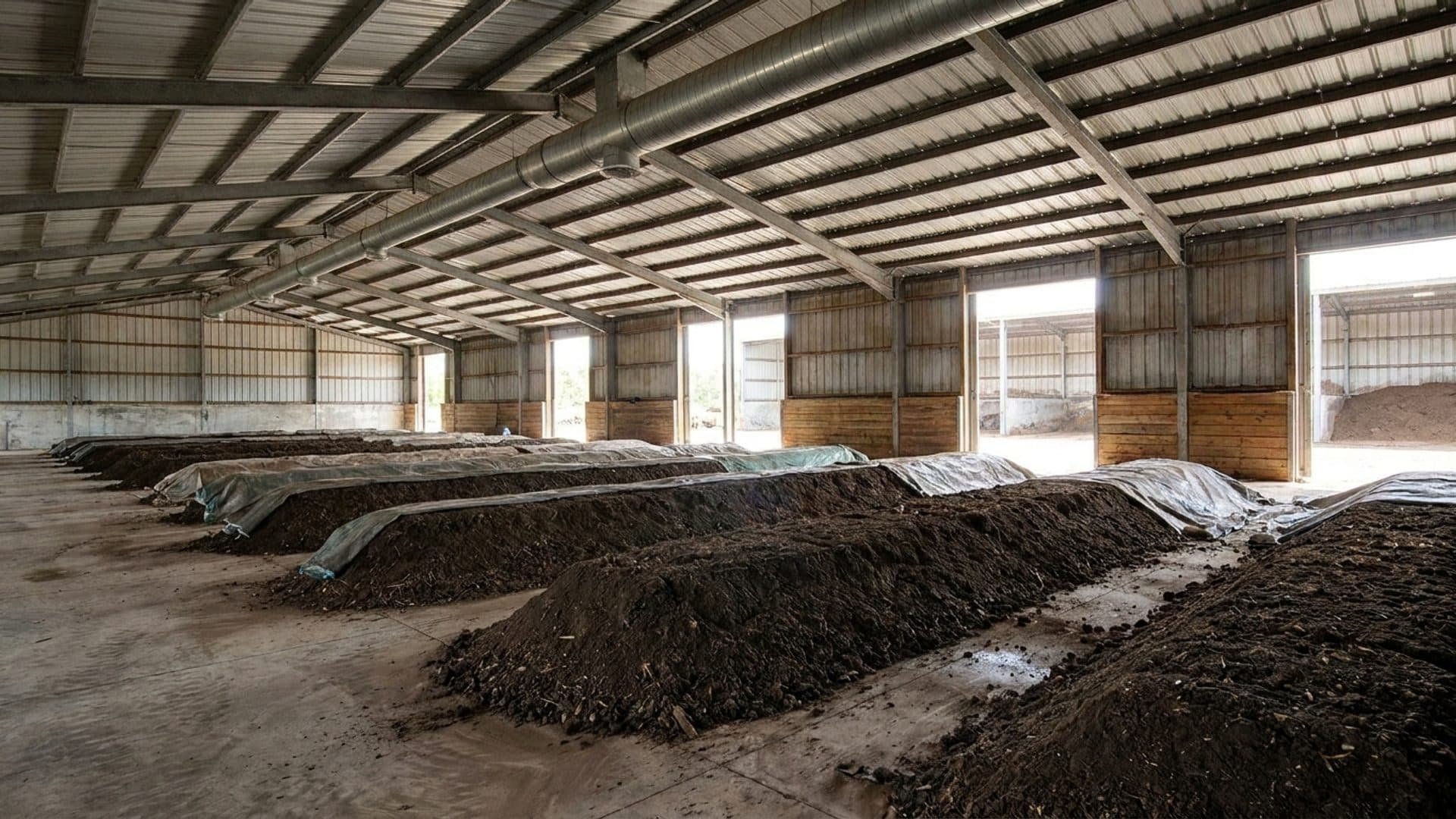
South Korea has amended its Clean Air Conservation Act Enforcement Rule to designate specified livestock-manure fertiliser fermentation facilities as air-pollutant emission facilities and set their ammonia emission limit at 90 parts per million (ppm). Ministry Ordinance No. 67 was promulgated on 4 November 2026 and took effect that day.
The amendment covers fermentation facilities operated by notified livestock-manure recyclers where the manure-recycling facility’s recorded average treatment capacity is at least 100 tonnes per day.
Where waste is mixed with manure to manufacture the fertiliser, the threshold uses the combined manure-recycling capacity and relevant waste-recycling capacity of the permitted or notified waste operator. It also covers fermentation facilities within specified public treatment facilities that turn livestock manure into compost or liquid fertiliser. Amendment to Annex 3, section 2(b)(13)(m).
The new definition concerns facilities that mature manure-based raw materials through methods such as supplying oxygen. It excludes raw-material storage, pre-treatment, post-maturation, screening and packaging, and liquid-fertiliser storage from that fermentation-facility definition.
The amended ammonia table separately lists livestock-manure matured organic fertiliser manufacturing at 90 ppm or less. Its other rows retain distinct categories: ordinary fertiliser and nitrogen-compound manufacturing at 12 ppm or less, and by-product fertiliser manufacturing excluding the livestock-manure category at 30 ppm or less. Annex 3 note 5 and amended Annex 8 ammonia table.
The ministry’s explanatory note identifies management of ammonia from these manure-fertiliser facilities as the reason for the change.
Official source
South Korean Clean Air Conservation Act Enforcement Rule amendment, Ordinance 67law.go.kr
Topics
No. The amended table sets 90 ppm or less for livestock-manure matured organic fertiliser manufacturing. It separately lists ordinary fertiliser and nitrogen-compound manufacturing at 12 ppm or less, and other by-product fertiliser manufacturing at 30 ppm or less.
For the notified manure-recycler route, the recorded average treatment capacity must be at least 100 tonnes per day. Where waste is mixed with manure, the rule combines the relevant manure- and waste-recycling capacities. Specified public manure-resource facilities are covered through a separate route.
Foresight follows changes like this one and shows where they reach your substances, products and markets.
Foresight Weekly brings the week's regulatory changes across chemicals, product safety, sustainability, ESG and EHS into one email.
Read by professionals at


 England

 France