
 Singapore
Singapore Anchorage Work Safety Guidelines Expand Maritime Risk Controls
Singapore is consulting on wider safety guidance for anchorage work, with clearer shared roles and controls for common maritime hazards.

Dr Steven Brennan
3 min readAI-drafted, expert reviewed
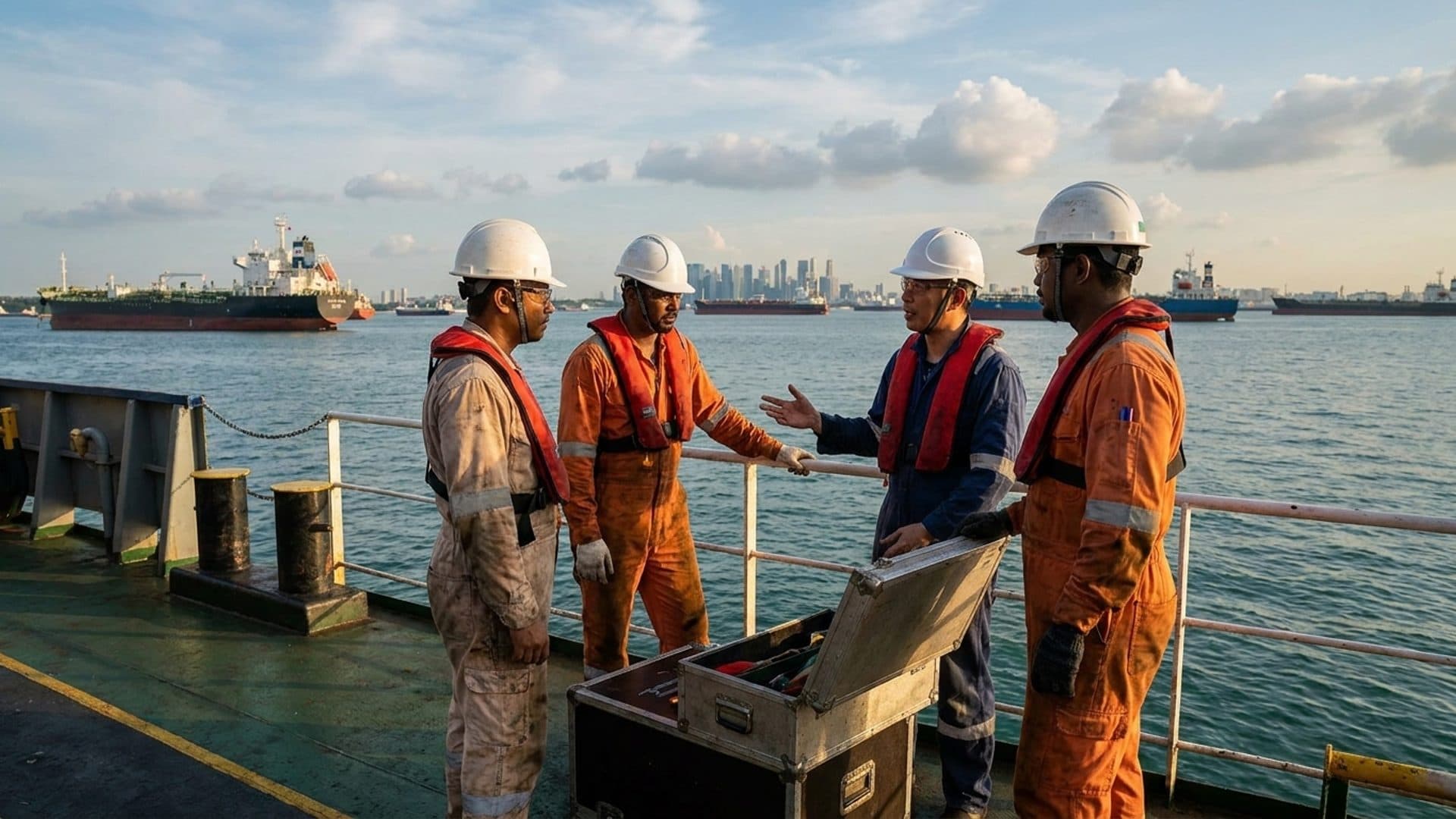
Singapore anchorage work safety guidelines are being expanded through a Workplace Safety and Health Council consultation opened on 1 September 2026. The draft covers work in Singapore port waters, including vessel maintenance, inspection, repair, surveys, bunkering and supporting services. Comments close on 28 September.
The enhanced document is intended to replace the existing Guide to Workplace Safety and Health Obligations for Shipmasters and Contractors for Anchorage Works. It is still draft guidance, so established statutory duties and current controls remain in force.
Singapore Anchorage Work Safety Guidelines Clarify Shared Roles
Anchorage jobs often bring several organisations onto one vessel or worksite. The proposal gives more attention to the relationships among shipmasters, vessel owners, operators and managers, shipping agents, contractors, launch operators and Vessel Safety Co-ordination Committees.
That allocation matters because hazards can sit between contracts. A launch operator may control transfer to the vessel, a contractor may supervise hot work or lifting, and the master retains authority over shipboard conditions. The draft therefore emphasises site-specific risk assessment, risk management and effective communication among the participating parties.
The activity scope is also wider. It addresses personnel transfer and boarding or disembarkation, mooring and unmooring, commercial diving, hot work, working at height, confined spaces and lifting operations. Technology and innovation options to reduce exposure appear alongside industry case studies and lessons from past incidents.
What Changed And What Remains Proposed
The current guide principally explains obligations for shipmasters and contractors. The draft recognises a broader operating network and provides more detail on how parties coordinate before and during work. It also brings common anchorage activities and their distinct hazards into one document.
No new exposure limit, equipment threshold or statutory exemption is created by the consultation announcement. The final wording may change after feedback, and the Council has not announced when the replacement will be issued.
Analysis, clearly identified as an inference: the draft points towards interface control as the main weakness regulators and industry want to address. A risk assessment held by one contractor is unlikely to be enough if transfer, isolation, weather, simultaneous operations and emergency arrangements are controlled by different parties.
Practical Actions For Maritime Operators And Contractors
Operators should compare the draft against vessel and contractor procedures for boarding, permits to work, isolation, confined-space entry, lifting, diving and hot work. They should identify who stops work, who checks changing site conditions and how simultaneous operations are communicated.
Contractors and launch operators should test whether task briefings, competence records, equipment checks and emergency plans can be shared across organisational boundaries. Vessel Safety Co-ordination Committees can review recurring interface failures and near misses.
Stakeholders submitting comments should cite operational evidence and propose precise changes by 28 September. Until a final version is published, organisations should not label draft recommendations as mandatory, but they should correct any gap that already conflicts with Singapore workplace safety law or a credible risk assessment.
Questions about this change
Are the enhanced anchorage-work guidelines already mandatory?
No. The Workplace Safety and Health Council is consulting on a draft that is intended to replace the existing guide. Current statutory duties, risk-management requirements and published controls still apply. The final guidance may change after comments are reviewed.
Who should coordinate safety when several contractors board a vessel?
The draft highlights shared responsibilities among masters, owners, operators, agents, contractors, launch operators and Vessel Safety Co-ordination Committees. Organisations should define authority, communication and stop-work arrangements for each phase rather than assume that one party's risk assessment controls every interface.

Dr Steven Brennan
CEO and co-founder of Foresight, and a co-opted member of ECHA's Committee for Socio-economic Analysis. He holds a PhD in chemical engineering.
More from Dr Steven BrennanFind out what this means for your products
Foresight follows changes like this one and shows where they reach your substances, products and markets.
 United States
 India
India
 South Korea
Join 3,500+ professionals staying ahead
Foresight Weekly brings the week's regulatory changes across chemicals, product safety, sustainability, ESG and EHS into one email.
Read by professionals at


