 European Economic Area
 New Zealand
New Zealand will require producer registration, fees, product data and take-back services for specified agrichemicals and farm plastics from 2027.

3 min readAI-drafted, expert reviewed
New Zealand has adopted the Waste Minimisation (Agrichemicals and Farm Plastics) Regulations 2026, turning long-running voluntary recovery arrangements into a mandatory extended producer responsibility system from 1 March 2027. Producers must register with the Rural Recycling Scheme for regulated products to remain saleable, while fees will fund nationwide take-back services.
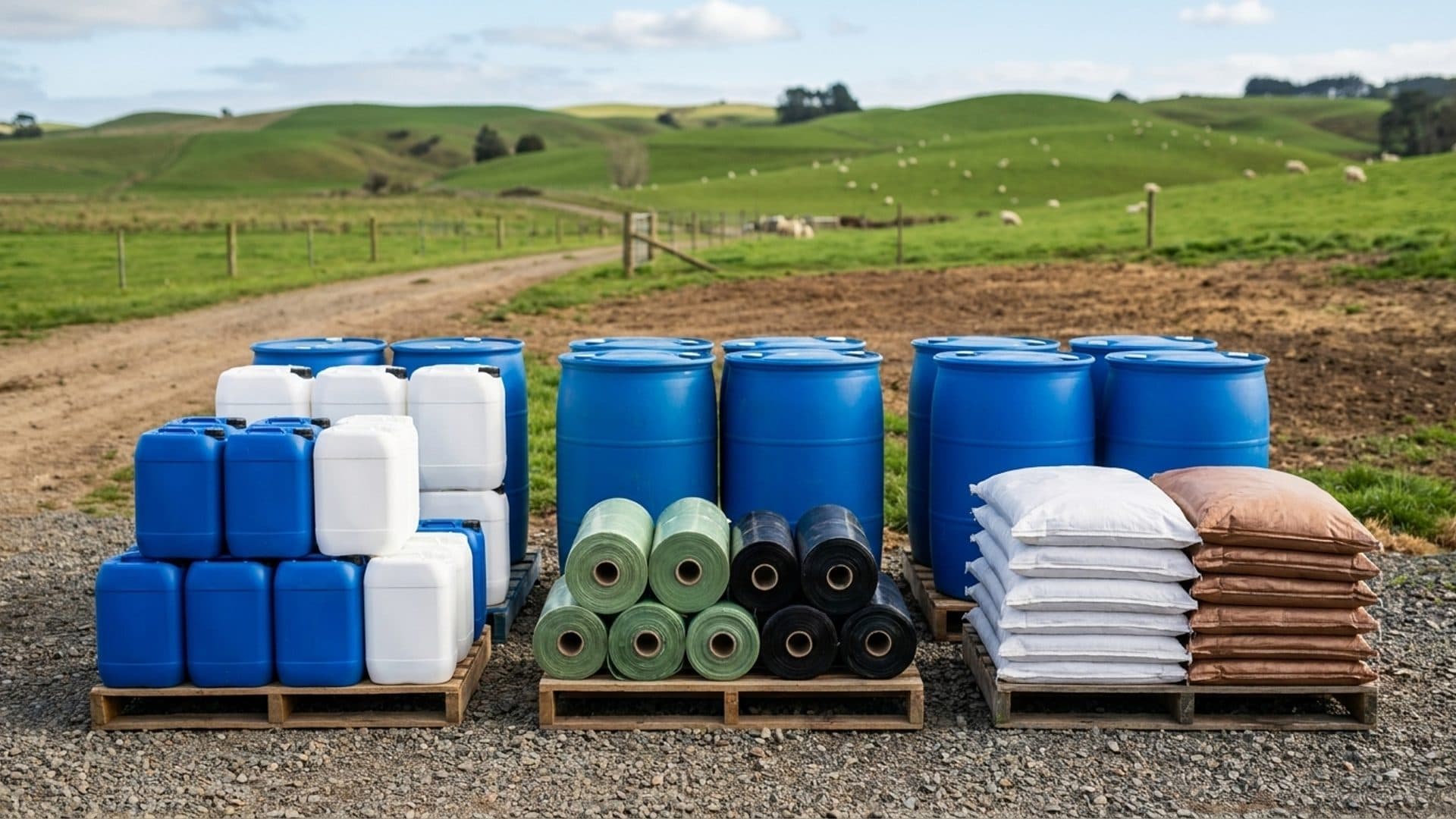
From commencement, a person must not sell a regulated product unless its producer is registered with the Rural Recycling Scheme operated by the Agrecovery Foundation. The rule reaches agrichemicals sold in plastic containers or drums of no more than 1,000 litres, plastic bale wrap and silage sheets, and specified agricultural products in plastic packaging.
Agricultural products are covered when packaged ready for New Zealand supply in plastic bags holding 16 to 40 kilograms, or woven polypropylene bags holding more than 40 kilograms. Products destined for further manufacturing or processing in New Zealand are excluded from this packaged-product limb.
The agrichemical definition covers liquid and solid substances used to manage plants or livestock, control pests or regulate plant or livestock health. It excludes aerosols, detergents and sanitisers, vertebrate toxic agents and most domestic-use products. Household pest and weed products remain in scope.
Agrichemical fees combine packaging and chemical components based on container capacity, product volume or weight and hazard grouping. For example, the packaging rate is NZ$0.10 per litre for containers up to 60 litres, with lower per-litre rates for larger containers and intermediate bulk containers.
Farm-plastic fees include NZ$462.02 per tonne for bale wrap or silage sheets, NZ$0.20 per 16 to 40 kilogram bag and NZ$3.58 per woven polypropylene bag above 40 kilograms. Goods and services tax is additional.
The scheme manager will invoice registered producers quarterly, with payment due within 20 working days. Products exported from New Zealand are exempt from the fee. The manager must collect prescribed sales and fee information within 60 days after each quarter and report to the Secretary within 75 days.
The take-back service must accept qualifying waste regulated products from any person, including consumers and commercial users, track collection and meet scheme targets. Producers fund the system, but farmers and growers are not compelled by these regulations to use it.
The new trigger is final, notified legislation. The regulations replace the voluntary funding model with a market-access condition, prescribed fees and accountable data flows. They do not ban the underlying agrichemicals or plastics, impose fees on exported products or require every end user to return material.
Registration status therefore becomes a supply-chain control, not only a producer task. Distributors and retailers will need reliable producer and product mapping because selling an unregistered producer's regulated product can itself breach the sales prohibition.
Identify the statutory producer for every in-scope product, validate container and bag sizes, and separate finished goods from inputs for further processing. Register in time for 1 March 2027, build quarterly volume and fee calculations, and update distributor controls. Confirm that take-back communications and contractual data rights support accurate reporting.
Official source
New Zealand Legislation, Waste Minimisation (Agrichemicals and Farm Plastics) Regulations 2026 (notified 27 August 2026)legislation.govt.nz
The regulations cover agrichemicals sold in plastic containers and drums of up to 1,000 litres. Aerosols, detergents and sanitisers, vertebrate toxic agents and most domestic products are excluded, while household pest and weed control products remain within the defined scope.
No. The scheme manager must make take-back available to consumers and commercial users for qualifying waste products, but the regulations do not compel farmers or growers to participate. The binding producer-side requirements concern registration, fees and scheme information.

Dr Steven Brennan
CEO and co-founder of Foresight, and a co-opted member of ECHA's Committee for Socio-economic Analysis. He holds a PhD in chemical engineering.
More from Dr Steven BrennanForesight follows changes like this one and shows where they reach your substances, products and markets.
Foresight Weekly brings the week's regulatory changes across chemicals, product safety, sustainability, ESG and EHS into one email.
Read by professionals at


 France
 Switzerland