 Great BritainGB Prior Informed Consent (PIC)GB Persistent Organic Pollutants (POPs)
Great Britain Adds New PIC, POPs And Mercury-Product Export Controls
Great Britain's revised GB PIC list adds consent controls and export bans for hazardous chemicals, POPs and specified mercury-added products.

Dr Steven Brennan
3 min readAI-drafted, expert reviewed
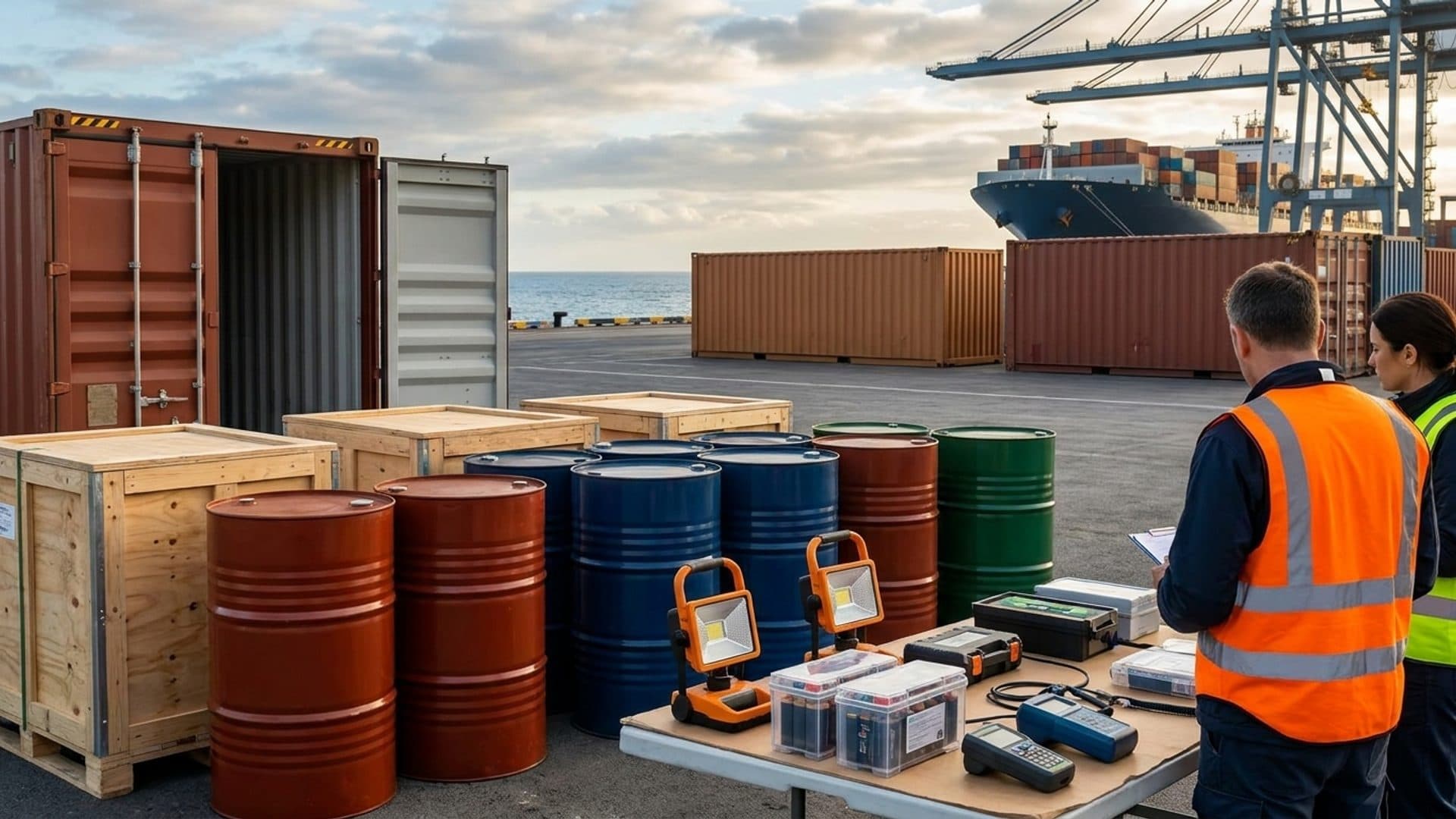
Great Britain has expanded its Prior Informed Consent (GB PIC) controls and export bans for hazardous chemicals and mercury-added products from 28 August 2026. The Health and Safety Executive (HSE) update affects chemical exporters and manufacturers across pesticides, fluorinated substances, flame retardants, electrical products, cosmetics and industrial measuring equipment.
GB PIC Export Controls Now Cover Additional Chemicals
The revised Part 3 list adds decabromodiphenyl ether, known as decaBDE, perfluorooctanoic acid (PFOA), its salts and related compounds, terbufos, carbosulfan and fenthion formulations at or above 640 grams of active ingredient per litre. Part 3 chemicals are subject to export notification and the Rotterdam Convention PIC procedure, including the importing country's response.
Carbosulfan and qualifying fenthion formulations move from Part 2 to Part 3, rather than becoming newly controlled from scratch. DecaBDE and PFOA also enter Part 1 because their industrial uses are severely restricted.
Part 4, which covers persistent organic pollutants subject to export bans, now includes dicofol, pentachlorophenol and its salts and esters, PFOA, perfluorooctane sulfonic acid, perfluorohexane sulfonic acid, methoxychlor and decaBDE. The list preserves specific exemptions or derogations available under Article 4 or Annex I of the assimilated POPs Regulation.
Exporters must therefore assess the precise substance, concentration, use and exemption before stopping or releasing a shipment.
Mercury-Product Export Bans Extend Across Manufacturing Sectors
Part 5 now prohibits exports of specified mercury-added products. These include compact fluorescent lamps, cold cathode and external electrode fluorescent lamps for electronic displays, batteries containing more than 0.0005% mercury by weight, certain switches and relays, specified cosmetics, pesticides, biocides, topical antiseptics and non-electronic measuring devices.
The list also covers strain gauges, melt-pressure devices, some pumps, tyre balancers and wheel weights, photographic film and paper, and mercury used as satellite propellant. Exemptions remain for civil-protection and military uses, research, instrument calibration and reference standards, and replacement components where no feasible mercury-free alternative exists.
What Changed And What Remains Unchanged
The new trigger is the operative list revision, not a consultation. Existing GB PIC mechanics continue: notification is generally due at least 35 days before the first export in a calendar year to each importing country, explicit consent may be required, and annual quantities are reportable by 31 March.
The research and analysis exclusion of no more than 10 kilograms per exporter, per year and importing country also remains available where its conditions are met.
Several substances appear in more than one list part, so screening only by chemical name can produce the wrong answer. Export decisions should combine substance identity with product form, concentration, intended use, destination and the applicable exemption evidence.
Practical Stakeholder Actions
Rescreen export catalogues and bills of material against all five list parts. Hold affected shipments until notification, consent or exemption evidence is complete. Product manufacturers should obtain mercury and persistent organic pollutant declarations from suppliers, while customs and logistics teams should update stop codes and escalation routes. Preserve records for the next annual quantity report.
Official source
Health and Safety Executive, Changes to the GB PIC list (updated 25 August 2026)hse.gov.uk
Questions about this change
Does every listed chemical require importing-country consent?
No. The applicable procedure depends on the list part and the importing country's decision. Part 1 requires export notification, while Parts 2 and 3 can require explicit consent or a PIC response. Parts 4 and 5 generally prohibit export, subject to stated exemptions.
Are all mercury-containing products now banned from export?
No. Part 5 lists particular product categories and thresholds, including batteries above 0.0005% mercury by weight. Civil-protection, military, research, calibration, reference-standard and certain replacement-component exemptions may apply, but exporters should document the exact legal basis.

Dr Steven Brennan
CEO and co-founder of Foresight, and a co-opted member of ECHA's Committee for Socio-economic Analysis. He holds a PhD in chemical engineering.
More from Dr Steven BrennanFind out what this means for your products
Foresight follows changes like this one and shows where they reach your substances, products and markets.
 European Union
 Global
Join 3,500+ professionals staying ahead
Foresight Weekly brings the week's regulatory changes across chemicals, product safety, sustainability, ESG and EHS into one email.
Read by professionals at


