 United States
FRA Final Rule Updates Railroad Bridge-Worker And Crane Safety Requirements
The FRA final rule creates an approval route for alternative bridge-worker systems and clarifies crane-operator training from 30 September 2026.

Dr Steven Brennan
3 min readAI-drafted, expert reviewed
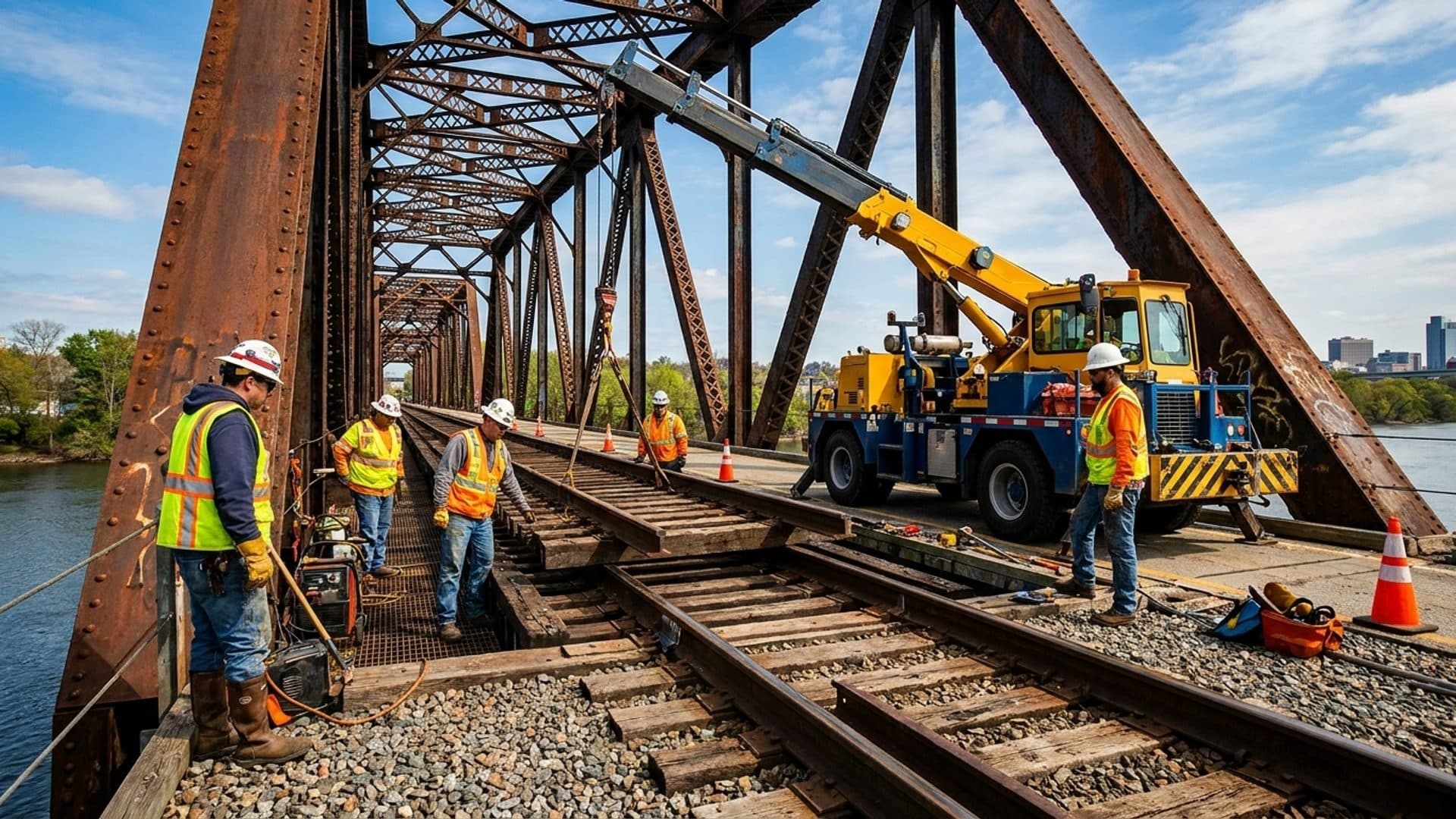
The FRA railroad workplace safety rule will amend 49 CFR Part 214 from 30 September 2026, after publication by the Federal Railroad Administration on 31 August. The final rule removes obsolete requirements, creates a special approval route for alternative bridge-worker safety systems and clarifies training for roadway maintenance machine operators using cranes.
The rule follows a July 2025 proposal and comments from rail labour organisations. FRA adopted most changes as proposed but retained an existing worker safeguard that the proposal would have removed.
FRA Railroad Workplace Safety Rule Allows Equivalent Bridge Systems
New Section 214.119 lets a railroad petition to use an alternative bridge-worker safety standard that provides at least an equivalent level of safety. The petition must describe the alternative and include supporting data, analysis or both. The railroad must notify designated employee representatives.
FRA will publish notice of a complete petition, normally allowing 30 days for comments. The agency states that it normally intends to decide within 90 days. A third-party safety verification may support the evidence, but the final rule does not make independent verification mandatory. It also does not require direct consultation with labour representatives beyond the specified notice.
The flexibility responds to concern that prescriptive bridge rules can discourage newer technology. It is not a self-certification route. A railroad needs FRA approval before using the alternative.
Crane Training Changes While Overhead Protection Stays
The amendment to Section 214.357 clarifies that training for operators of roadway maintenance machines equipped with cranes must cover relevant machine and crane requirements, including maintaining vertical clearance. Equipment suppliers and training providers should therefore connect operating limits and site conditions to documented operator competence.
FRA also removed provisions that had aged out or become redundant. However, after unions raised concerns, the agency did not repeal Section 214.515(b). Workers operating machines without adequate overhead protection retain the right to request that protection. The related existing protection in paragraph (c) also remains.
What changed is the bridge-safety petition mechanism, the explicit crane-training clarification and the removal of obsolete text. What remains unchanged includes the baseline requirement for equivalent safety, FRA review and the retained overhead-cover safeguard.
The petition route shifts some work from prescriptive compliance to evidence quality. This is an inference from the approval test. Engineering, operating and workforce records must tell one consistent safety story because a novel system will be judged on demonstrated equivalence rather than its commercial promise.
Practical Actions For Railroads And Contractors
Railroads should update Part 214 procedures and training materials by 30 September, while checking that retained protections are not accidentally deleted during document clean-up. Crane modules should address vertical-clearance assessment, safe operating envelopes and site-specific hazards.
Organisations considering an alternative bridge system should assemble engineering analysis, field evidence, employee-notification records and a comment-response plan before petitioning. Contractors should align their training and equipment documentation with the host railroad because gaps can affect both approval evidence and daily control.
Foresight's occupational health and safety topic tracks related workplace control changes.
Official source
US Federal Register, Railroad Workplace Safety final rule, 91 FR 55749 (31 August 2026)govinfo.gov
Questions about this change
Can A Railroad Start Using An Alternative Bridge-Worker System Immediately?
No. The new procedure allows a petition, not unilateral substitution. The railroad must provide evidence of at least equivalent safety, notify designated employee representatives and obtain FRA approval after public notice and an opportunity for comment.
Did FRA Remove The Right To Request Overhead Protection?
No. FRA proposed repealing Section 214.515(b) but changed course after labour comments. The final rule retains the worker's right to request overhead protection when a roadway maintenance machine lacks adequate protection.

Dr Steven Brennan
CEO and co-founder of Foresight, and a co-opted member of ECHA's Committee for Socio-economic Analysis. He holds a PhD in chemical engineering.
More from Dr Steven BrennanFind out what this means for your products
Foresight follows changes like this one and shows where they reach your substances, products and markets.
 Vietnam

 South Korea
Join 3,500+ professionals staying ahead
Foresight Weekly brings the week's regulatory changes across chemicals, product safety, sustainability, ESG and EHS into one email.
Read by professionals at


