 Taiwan
Taiwan Proposes Food-Waste Traceability Rules For Feed And Animal Circular Materials
Taiwan proposes daily records and three-year evidence retention for designated institutional food waste reused as animal-derived circular material. The amendment is not yet final.

Dr Steven Brennan
3 min readAI-drafted, expert reviewed
Taiwan Proposes Food-Waste Traceability Rules
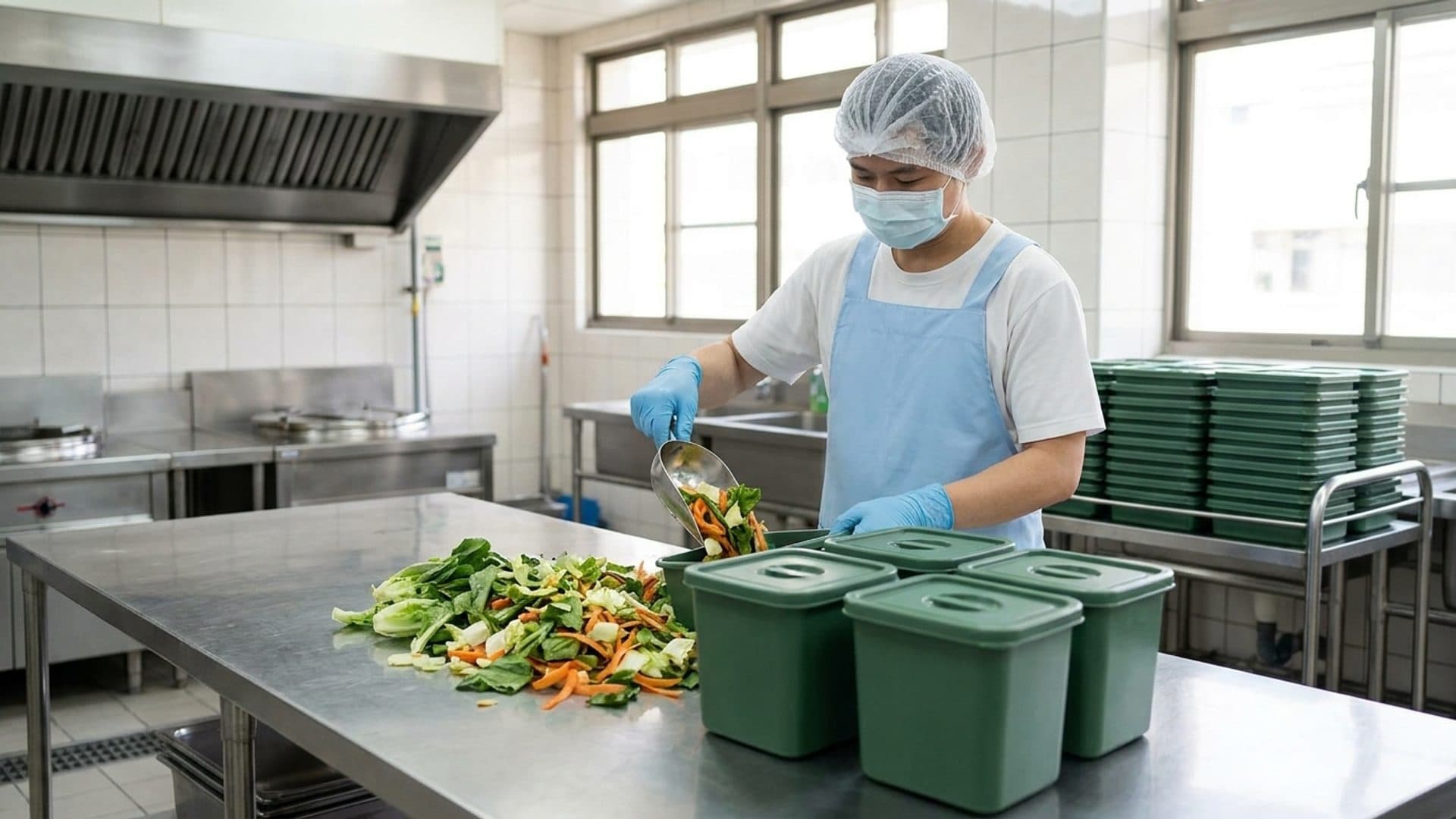
Taiwan's Ministry of Environment has proposed food-waste traceability rules for designated institutional catering waste reused as animal feed raw material or animal-derived circular material. The draft amendment announcement, published on 7 September 2026, would revise Annex 1 to the General Waste Clearance and Treatment Methods. It is not yet final.
The affected sources are centrally catered schools, military and military-education institutions under the Ministry of National Defence, and correctional institutions under the Ministry of Justice that the agriculture ministry designates.
Feed Rules And Daily Records
The draft retains existing duties under the Feed Administration Act and associated feed requirements for food waste reused as an animal-feed raw material or an animal-derived circular material. The amendment does not replace feed safety, authorisation or hygiene controls, and the Ministry's notice sets no new compositional threshold for feed in the summary.
For reuse as an animal-derived circular material, waste-clearance organisations and reuse organisations would have to make daily operating records. The reuse organisation would keep operating records and related supporting documents for three years. The proposal states that Article 34(3) of the Regulations Governing General Waste Recycling, Clearance and Disposal would not apply to that route.
These duties are intended to make the source and onward flow of food waste visible. The proposal does not turn all commercial food waste into the designated circular material, nor does it establish a general permission to feed untreated catering waste to animals. Scope depends on the named institutional sources, the agriculture ministry's designation and the selected reuse route.
What Remains Proposed And What Applies Now
Existing waste and feed legislation continues to apply while consultation proceeds. The official public participation record gives 10 September 2026 as the closing date after an unusually short three-day comment period. The Ministry cites urgency and public interest for that shortened period. No commencement date is stated, so organisations should verify any later promulgation rather than assume the record duties are already operative.
Food-service bodies should identify whether kitchens fall within the listed institutional categories and whether their waste is covered by the agriculture ministry's designation. Clearance and reuse operators should test whether systems can create daily, source-to-destination records. Reuse operators should confirm that systems can retain evidence for three years. Feed businesses and livestock operators should separately confirm compliance with feed-law conditions.
Related Foresight coverage includes Taiwan's revised electronics recycling fees, the EU agreement on waste-framework changes and food-waste targets and China's industrial green plan.
What Organisations Should Do
Covered institutions and contractors should map waste origin, legal destination, carrier and receiving facility in one data flow. Contracts should specify which party makes daily records, supplies evidence, retains documents and reports route changes. Stakeholders wishing to comment must act by 10 September 2026.
Official source
Taiwan Ministry of Environment draft amendment announcement (7 September 2026)enews.moenv.gov.tw
Questions about this change
Which food-waste sources would the Taiwan proposal cover?
It targets food waste from school central kitchens, Ministry of National Defence bodies, and Ministry of Justice correctional institutions that the Ministry of Agriculture designates. It is not a general rule for every restaurant, retailer or food manufacturer.
Are the daily records and three-year retention duty already in force?
No. They form part of a draft amendment. Existing waste and feed rules continue to apply until a measure is promulgated and effective. Operators should monitor the Executive Yuan Gazette for the consultation notice, any final text and the commencement arrangements rather than using the news-release date as commencement.

Dr Steven Brennan
CEO and co-founder of Foresight, and a co-opted member of ECHA's Committee for Socio-economic Analysis. He holds a PhD in chemical engineering.
More from Dr Steven BrennanFind out what this means for your products
Foresight follows changes like this one and shows where they reach your substances, products and markets.
 United States
 New Zealand
Join 3,500+ professionals staying ahead
Foresight Weekly brings the week's regulatory changes across chemicals, product safety, sustainability, ESG and EHS into one email.
Read by professionals at


