 Spain
Spain
Spain Gives Strategic Status To Renewable And Storage Projects At Just-Transition Nodes
Spain grants strategic status to renewable and storage projects that win capacity through just-transition node tenders. Environmental safeguards and a 3% municipal payment remain.

Dr Steven Brennan
3 min readAI-drafted, expert reviewed
Spain Designates Strategic Renewable And Storage Projects
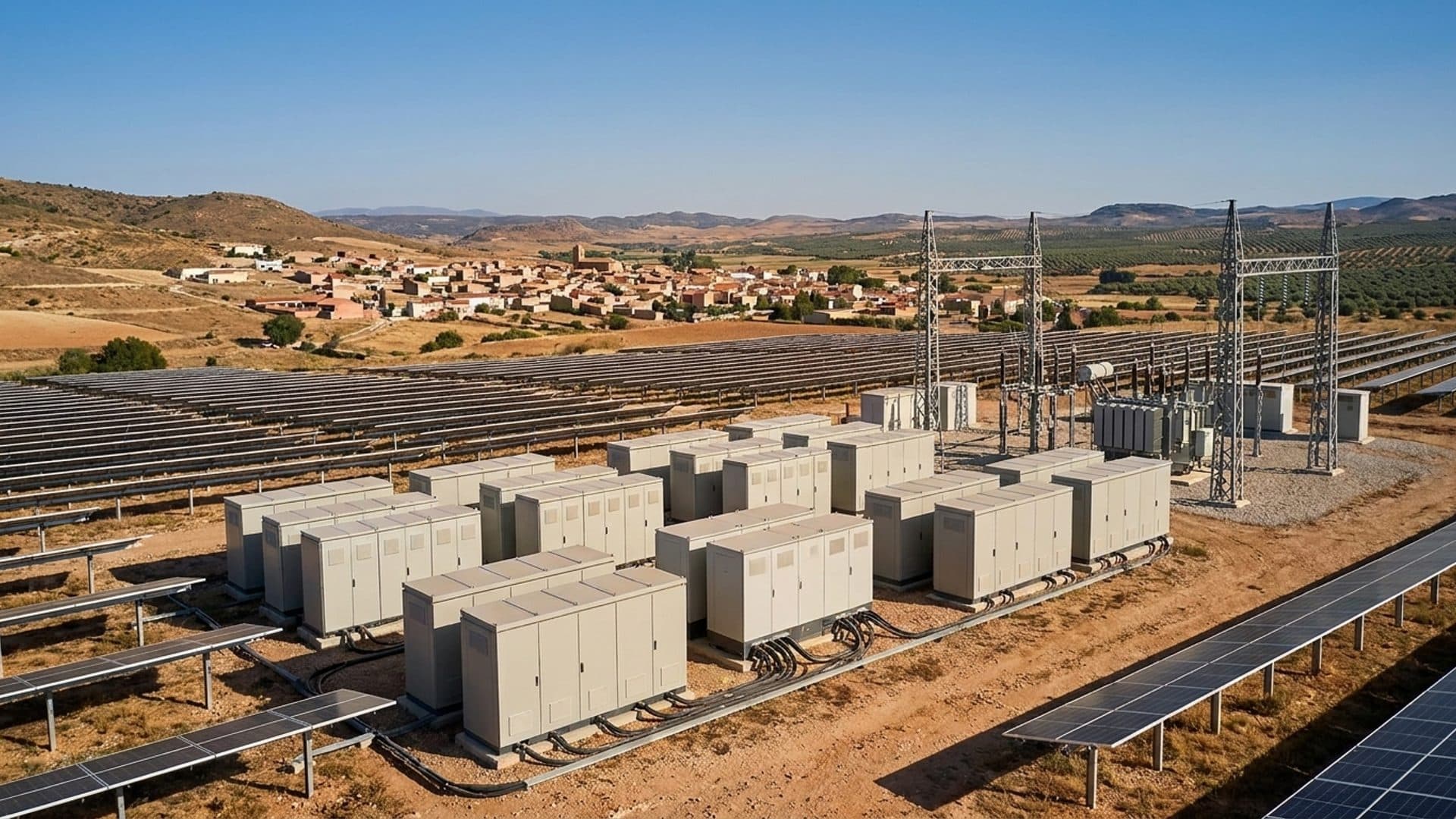
Spain has designated certain strategic renewable and storage projects at just-transition grid nodes, giving qualifying schemes urgent and preferential administrative treatment. The Council of Ministers adopted the agreement on 28 July 2026, and the Ministry for the Ecological Transition and Demographic Challenge published it through Resolution BOE-A-2026-18700 on 7 September.
The measure covers renewable-generation and energy-storage projects awarded evacuation-grid capacity through the special tender procedure in additional provision 22 of Electricity Sector Law 24/2013. These tenders concern nodes linked to closures of thermal or nuclear generation and include commitments on employment, training and local business development.
Preferential Processing Without Weaker Safeguards
Qualifying projects become preferential energy projects under Article 21(1)(e) of Royal Decree-Law 7/2026. Authorisation, environmental-impact assessment, administrative decision and administrative-appeal procedures are declared urgent for public-interest purposes under Article 33 of Law 39/2015.
That status does not generally reduce statutory time limits. The official text says reductions apply only where the relevant legislation expressly provides for them. Energy-law requirements, administrative-procedure rules, environmental assessment and other applicable controls remain intact. The designation does not lower substantive standards, environmental guarantees or the level of protection.
Scope is also narrower than a general national permitting acceleration. It does not extend to the first-come access and connection procedure under Royal Decree 1183/2020. Developers must therefore confirm that their capacity was awarded through the specified just-transition tender rather than infer eligibility from location alone.
Municipal Payment And Public-Works Treatment
The projects also receive the treatment attached to public works of general interest under additional provision 12 of Law 13/2003, helping their alignment with urban-planning arrangements. Before works start, promoters must pay each municipality hosting the project 3% of the execution-budget items for materials, civil works and electromechanical assembly.
The decision is final in the administrative route. An optional reconsideration request may be filed with the Council of Ministers within one month, or a contentious-administrative appeal may be brought before the Supreme Court within two months from the day after publication. These are challenge periods, not project compliance deadlines.
Implications For Developers And Supply Chains
Developers should evidence the grid-access award route, map every authorisation and environmental assessment, and build the municipal payment into project finance and construction readiness. Engineering, procurement and construction contractors should not schedule work on the assumption that urgency automatically shortens every stage. Municipalities and local suppliers should connect tender commitments to measurable employment, training and procurement deliverables.
Related Foresight coverage includes the EU RESourceEU action plan, the EU debate linking chemicals policy and the circular economy and China's 2026-2030 industrial green plan.
Topics
Questions about this change
Which Spanish energy projects receive strategic status?
The designation covers renewable-generation and energy-storage projects winning evacuation-grid access through special just-transition-node tenders under additional provision 22 of Law 24/2013. It excludes projects using the general first-come access and connection regime merely because they are near those nodes.
Does strategic status remove environmental assessment requirements?
No. The agreement gives qualifying procedures urgent and preferential treatment, but it expressly preserves substantive requirements, environmental-impact assessment and ordinary controls. Statutory deadlines are generally unchanged unless applicable legislation expressly provides otherwise, so promoters must maintain complete technical, environmental and consultation evidence.

Dr Steven Brennan
CEO and co-founder of Foresight, and a co-opted member of ECHA's Committee for Socio-economic Analysis. He holds a PhD in chemical engineering.
More from Dr Steven BrennanFind out what this means for your products
Foresight follows changes like this one and shows where they reach your substances, products and markets.
 United States
 European Economic Area
 Great Britain
Join 3,500+ professionals staying ahead
Foresight Weekly brings the week's regulatory changes across chemicals, product safety, sustainability, ESG and EHS into one email.
Read by professionals at


