 European Economic Area
 Northern Ireland
EU Commission Tables “Industrial Accelerator Act” To Speed Low‑carbon Manufacturing And Strategic Supply Chains
The European Commission has proposed an Industrial Accelerator Act to speed low-carbon manufacturing, streamline permits and reinforce strategic supply chains across the EU.

Dr Steven Brennan
3 min readAI-drafted, expert reviewed
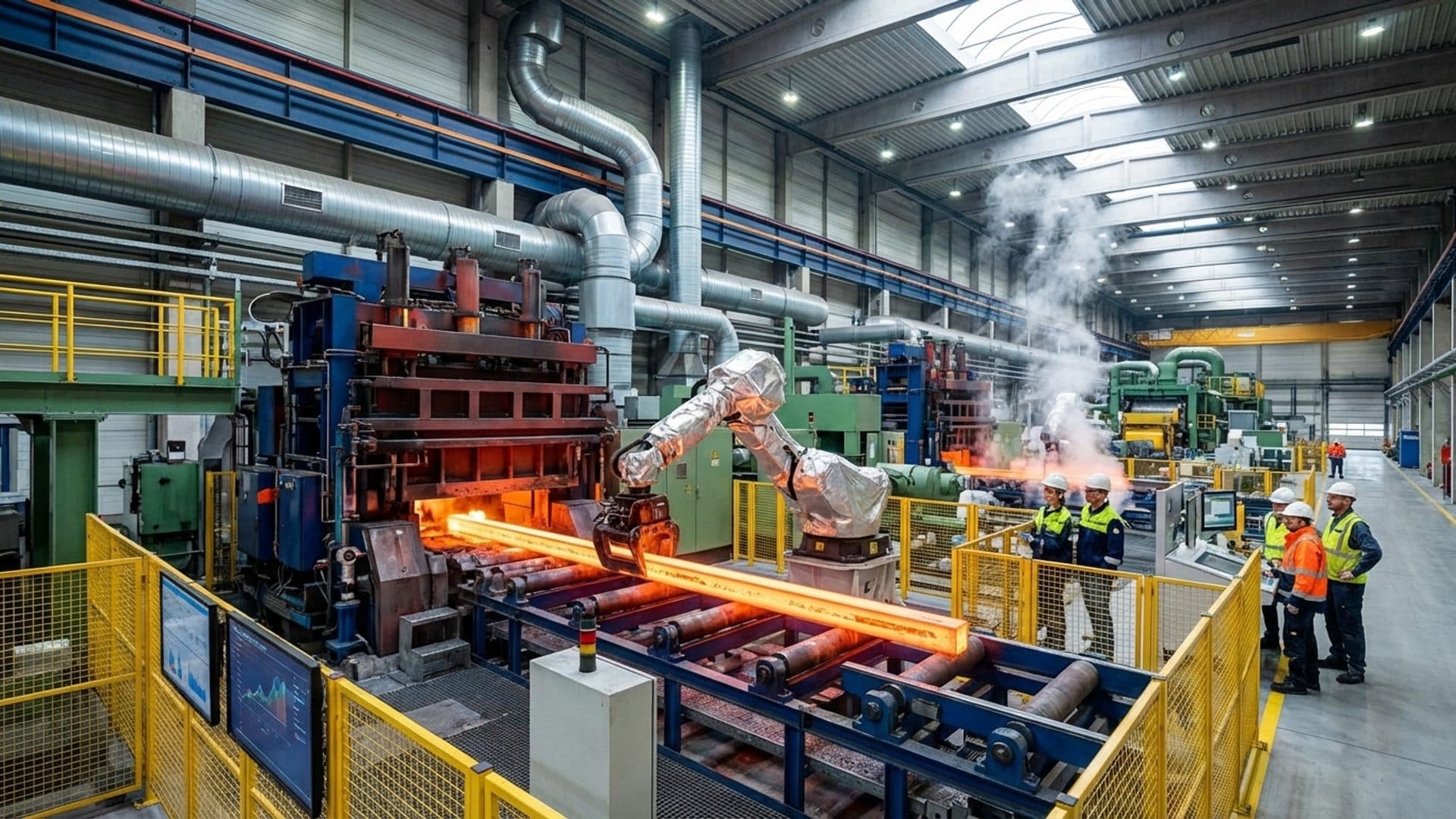
EU Commission tables “Industrial Accelerator Act” to speed low‑carbon manufacturing and strategic supply chains Brussels, March 2026 — The European Commission has published a proposal for an Industrial Accelerator Act (IAA), a new EU regulation intended to accelerate industrial capacity and decarbonised production across strategic sectors, including energy‑intensive industries, net‑zero technologies and the automotive value chain. The proposal is set out in COM(2026) 100 final and is flagged as EEA‑relevant.
A framework to “accelerate” projects: faster permits and industrial acceleration areas A central feature of the proposal is a push to streamline permitting for industrial manufacturing and decarbonisation projects. The Commission proposes that Member States establish more digital, single‑entry procedures (a “one‑stop shop” style approach) and designate industrial manufacturing acceleration areas designed to reduce administrative friction and coordinate enabling conditions such as planning and grid-related preparation.
Creating lead markets via public procurement and support schemes The IAA proposal also seeks to create EU lead markets for low‑carbon and EU‑origin production by embedding criteria into public procurement and public support schemes. According to the proposal, from 1 January 2029 minimum shares of low‑carbon materials would apply (in defined cases) to industrial materials such as steel, concrete/mortar, and aluminium, with specific “Union‑origin” requirements proposed for some materials (notably concrete/mortar and aluminium) in certain contexts.
The Commission has also published accompanying communication materials (press release, Q&A and factsheet) framing the initiative as part of its approach to strengthening EU industry and jobs via demand-side pull and easier project delivery.
Foreign investment conditions for strategic manufacturing Another notable element is a proposed EU approach to foreign direct investment (FDI) in certain emerging strategic manufacturing sectors. The draft would apply additional conditions for FDI above EUR 100 million in areas including parts of the battery value chain, zero‑emission vehicles and components, solar PV, and critical raw materials—intended to reinforce EU value chains and economic security.
Impact assessment published alongside the proposal The Commission has also issued an impact assessment (SWD(2026) 71 final) analysing policy options and expected effects, including the rationale for combining demand measures (procurement/support schemes), investment and permitting reforms, and targeted approaches for strategic sectors.
Industry reaction and next steps An additional alert captures early stakeholder positioning, including a Cefic statement supporting the initiative while calling for stronger demand-side measures for the chemical industry, and noting planned discussion of an opinion at the European Economic and Social Committee (EESC) in June 2026.
What happens next: the Industrial Accelerator Act is currently at the proposal stage and will proceed through EU negotiations in the European Parliament and Council, meaning scope, timelines, and detailed requirements may change before adoption.
Questions about this change
What does the proposed Industrial Accelerator Act do?
The proposal would accelerate industrial manufacturing and decarbonisation projects through streamlined permitting, industrial acceleration areas and demand-side criteria in procurement and support schemes. It also introduces a framework for conditions on some large foreign direct investments in strategic manufacturing sectors.
What happens next for the Industrial Accelerator Act?
The Act remains at the proposal stage and will now be negotiated by the European Parliament and the Council. Its scope, timing and detailed obligations may change before adoption, so companies should monitor the legislative process closely.

Dr Steven Brennan
CEO and co-founder of Foresight, and a co-opted member of ECHA's Committee for Socio-economic Analysis. He holds a PhD in chemical engineering.
More from Dr Steven BrennanFind out what this means for your products
Foresight follows changes like this one and shows where they reach your substances, products and markets.

Join 3,500+ professionals staying ahead
Foresight Weekly brings the week's regulatory changes across chemicals, product safety, sustainability, ESG and EHS into one email.
Read by professionals at


